For the past couple of weeks I’ve been fighting a problem on two fronts: focus and motivation. Both in my personal life and in my professional work. Finding any kind of balance between the two has always been a challenge.
Tools help. My current stack of Obsidian + Todoist + Notion does a good job of keeping life organized. But there’s a limit to how far organization alone can take you. Eventually your brain and body get tired, and when they do, productivity systems stop being the problem.
For years my solution to that problem was caffeine.
Not the typical “coffee and energy drink” routine. I left that behind in my 20s and 30s. Instead I got more… technical about it. Caffeine gum. Caffeine-infused water. Even water-soluble caffeine powder so I could dial in the dosage.
After enough experimenting you can eliminate the jitters. But you can’t ignore what sustained caffeine intake does to your blood pressure and heart rate. Eventually you realize the productivity boost isn’t worth the long-term cost.
So you start looking for something better. Something at least a little more natural—or at least less damaging.
That search led me to magnesium.
What I quickly discovered is that magnesium isn’t just one thing. There are several different forms, each affecting the body differently. Once you go down that rabbit hole (and do far too much research), you start realizing you can use different types of magnesium to address different problems.
In my case, the real issue wasn’t always fatigue. It was poor sleep quality, which eventually turns into fatigue.
I had already taken some steps in that direction:
- A better mattress
- A consistent bedtime
- 6.5–7 hours of sleep per night
- A 30-minute wind-down before bed
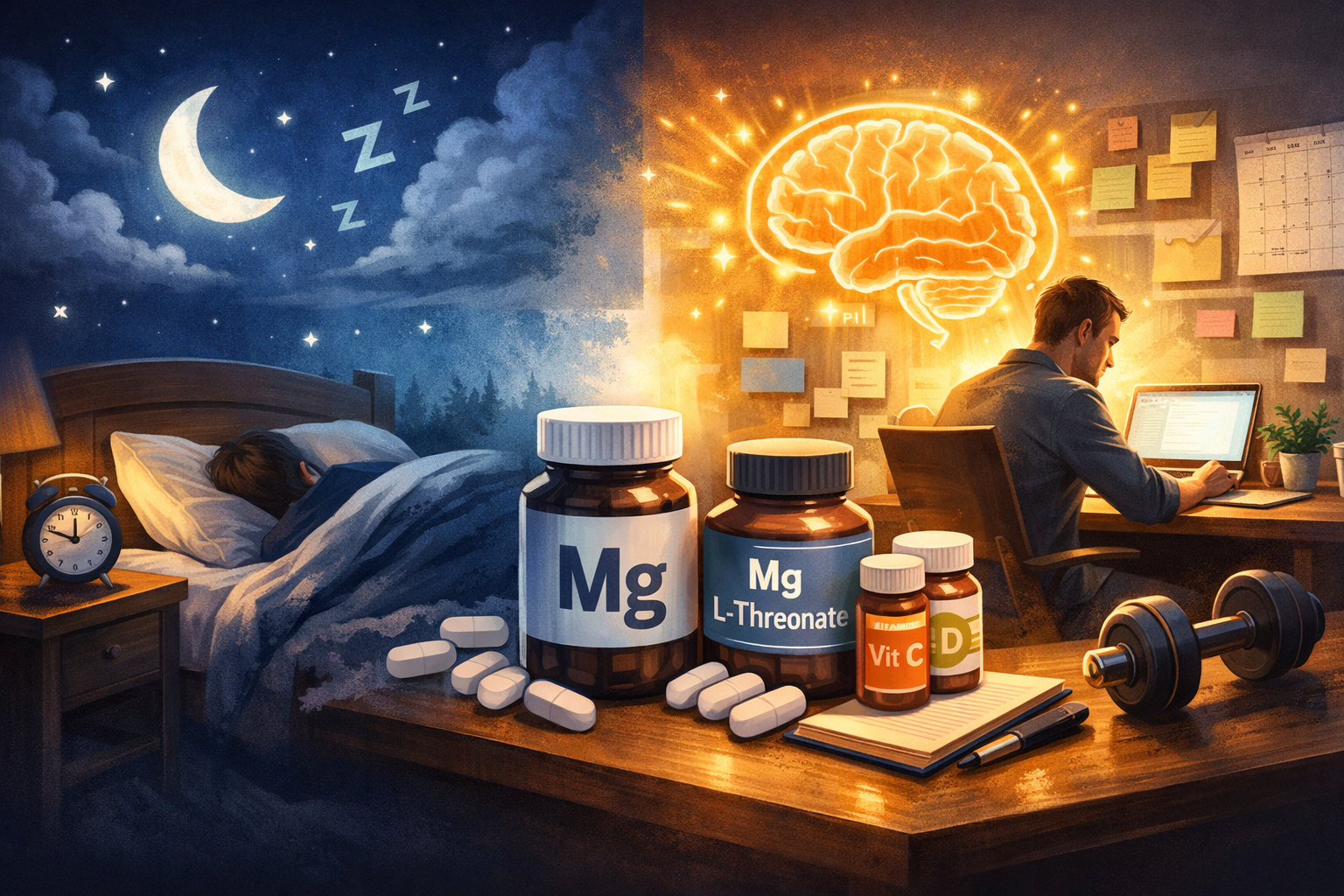
All of that helped. But what really made a difference was adding magnesium glycinate.
After experimenting with dosage, I found that 100 mg about 30 minutes before bed dramatically improved my sleep quality. Using my Apple Watch and sleep tracking apps, I could actually see the difference in deeper sleep cycles and fewer wake-ups during the night.
Once that improved, something interesting happened: I wasn’t tired during the day anymore.
Pair that with a short morning workout to get the brain moving, and mornings became much easier to handle.
The next challenge showed up around mid-afternoon. That’s when focus started slipping. My brain would drift off topic, and the productivity I had in the morning started fading.
That’s when I came across magnesium L-threonate, often paired with vitamin C and D.
Taken during the day, it seems to help bring my attention back to the task in front of me. It doesn’t magically create motivation, but it gives me a fighting chance to stay focused when the afternoon slowdown starts.
There is a downside.
Even though the total magnesium intake is still within healthy levels, it increases the need for water, at least for me. I’ve noticed more dehydration, especially overnight. That means being more intentional about water intake during the day—without drinking so much in the evening that I’m waking up in the middle of the night.
That balance is still something I’m dialing in.
But so far the benefits have been worth the effort.
What started as a search for motivation turned into a reminder of something simple: sometimes the problem isn’t productivity systems, discipline, or motivation.
Sometimes the problem is sleep.
And sometimes fixing sleep fixes everything else.

Leave a Reply